🖋️ “For things to appear new (…) one needs, in art, as in medicine, as in high society, some…
Translated from French.
🖋️ “For things to seem new (…) we need, in art as in medicine and in high society, new names.” (TR, III, 726)
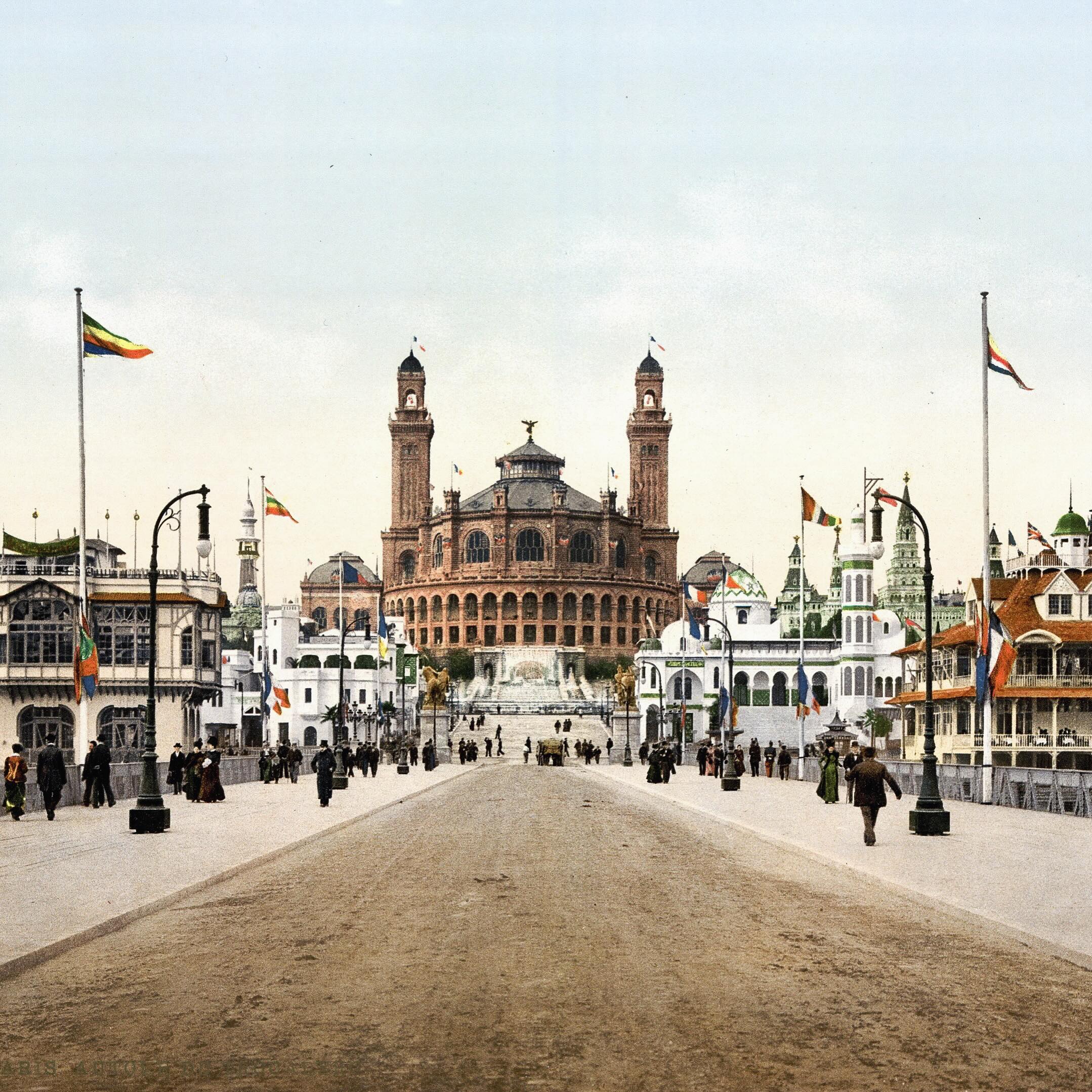
Whilst I’m working on both Proustian settings and medical metaphors 👨🏻⚕️ in the Search, my attention turned, somewhat by chance, to the Palais du Trocadéro. Are you familiar with it?
If you think I’m talking about that square-shaped palace opposite the Eiffel Tower, you’re mistaken: that one is the Palais de Chaillot, built in 1937, which Proust (1871–1922) never saw. 🤷🏻♂️
However, the Palais du Trocadéro, which Proust knew, had been built in 1878 for the Paris World’s Fair and was demolished in 1935. Its architecture, which was eclectic in style, drew inspiration from Moorish and Neo-Byzantine designs 🕌. It occupied a prominent position during the construction of the Eiffel Tower in 1889 and at the 1900 Exhibition, when the @petitpalais_musee and the @grand_palais made their debut 🫶🏻.
It is therefore indeed the Palais du Trocadéro, and not its successor, that one must picture dominating the Parisian night-time skyline in “Finding Time Again” 🕰️. The palace is flanked by two towers crowned with gilded domes, which have proved controversial as they resemble minarets. The architect indeed wanted them to be “similar to the bell towers that call Christians to church, to the minarets that announce prayer in the East, and to the belfries that once gathered citizens in the public square”.
🖋️ “Throughout the part of the city overlooked by the Trocadéro towers, the sky looked like a vast sea of turquoise hues (…). There, the impression of the Orient I had just experienced returned (…) an Orient that was at once meticulously accurate in terms of costumes and the colour of the faces, yet arbitrarily fantastical in its setting—just as Carpaccio transformed the city where he lived into a Jerusalem or a Constantinople by assembling a crowd whose marvellous variety was no more colourful than this one.” (TR, III, 763)
👇🏻 One last excerpt in the comments. 👇🏻
#MarcelProust #proustagram #PalaisduTrocadéro #Trocadéro #LeTempsretrouvé #ÀlaRechercheduTempsperdu #architecture #1916
Comments 6
Comments translated automatically.
On Instagram