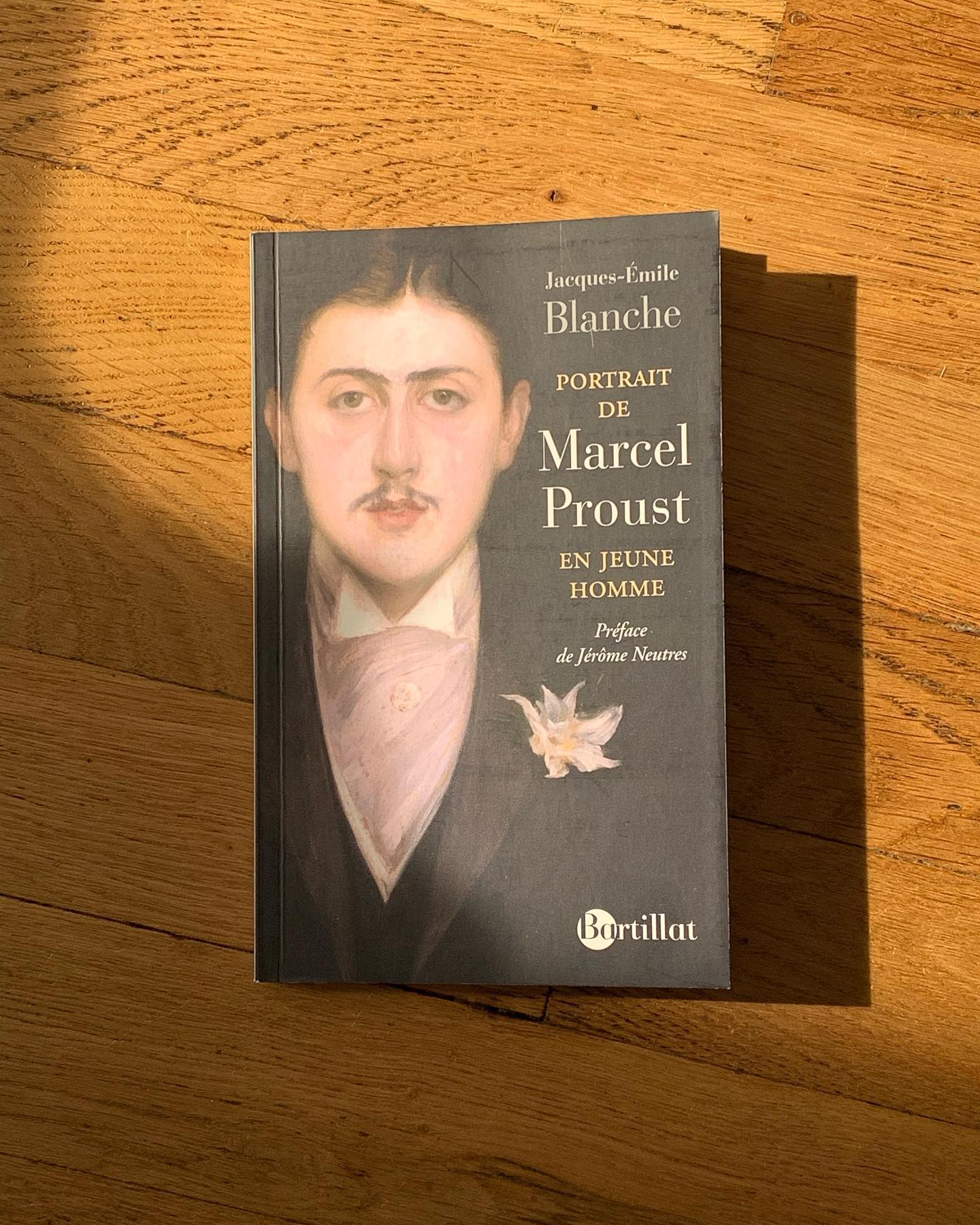
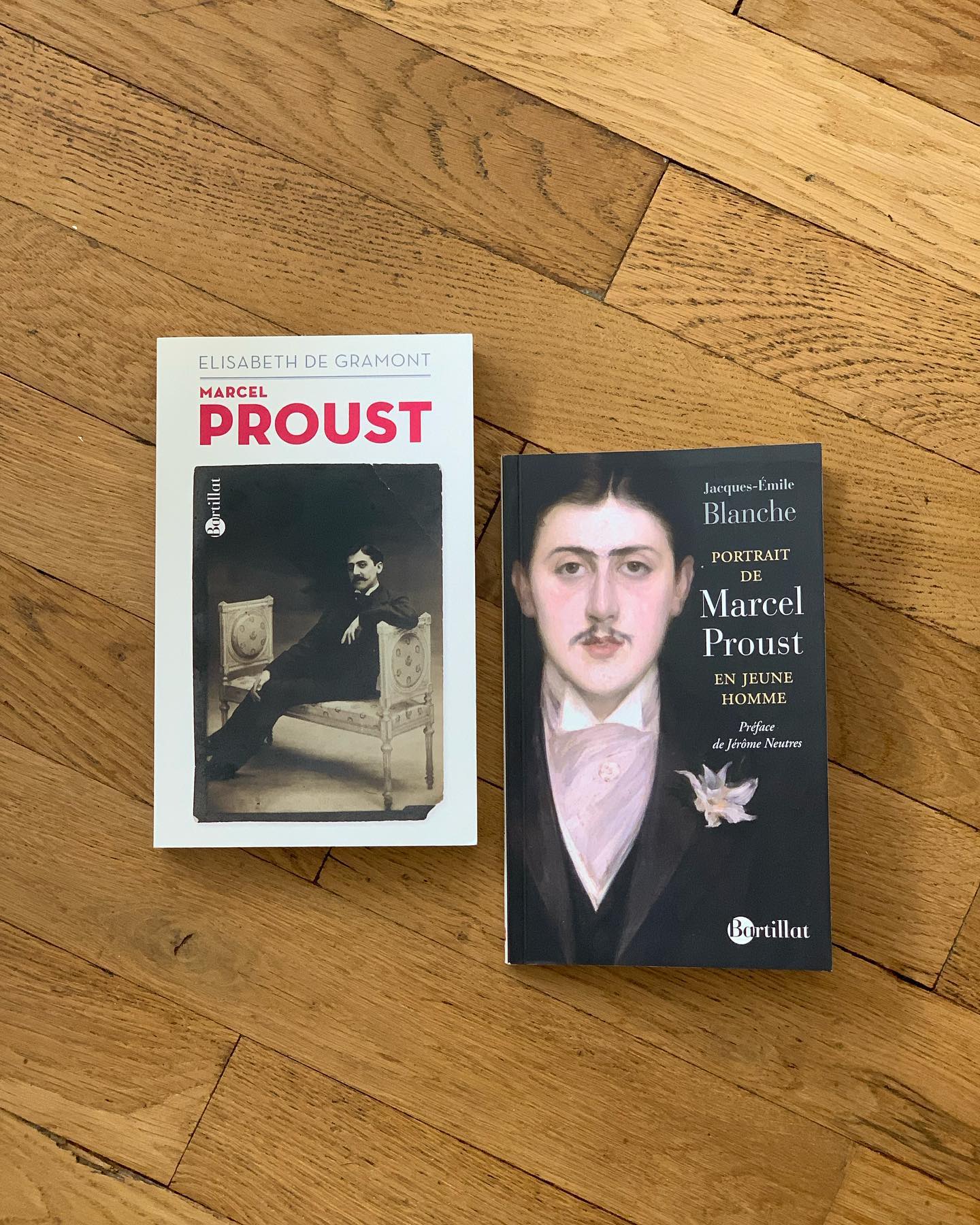
Jacques-Émile Blanche, “Portrait of Marcel Proust as a Young Man”, @editionsbartillat 2014
Translated from French.
Jacques-Émile Blanche, “Portrait of Marcel Proust as a Young Man”, @editionsbartillat 2014 📚✨
Following a 30-page foreword written by @jerome.neutres, in which he explains that Blanche had always harboured a desire to write and that his entire body of paintings is overshadowed by the “Mona Lisa of the Proustians”, this volume comprises four texts by the painter and a few appendices, totalling around a hundred pages. ✔️
The first text is, in my view, actually the most successful and the most surprising. In an article in “L’Écho de Paris” 🗞️ dated 15 April 1914, Blanche was one of the very first and most perceptive commentators on the first volume of the “Search”, “Swann's Way”, which had been published a few months earlier. In it, the painter sees what many commentators, critics and publishers failed to see at first: the ‘bright room’ and ‘a sort of cinema’ 🎥, the ‘book of insomnia’ 🛏️ and the “walls of glass” 🪞, characters reduced to the size of insects 🐜 or sea creatures 🐡, the new genre blending novel and essay, laughter, “Cubism”… A discerning reader of “Finding Time Again”, published in 1927, might have spotted all this, but a reader from 1914 who had only read “Swann's Way” and sensed all this is a true seer. 👏🏻
The second text is an article from “@lefigarofr” 🗞️ dated 22 September 1919. Blanche shares her thoughts on the proofs of “In the Shadow of Young Girls in Flower” 📖, a book which has not yet been published and which, on 10 December, will be awarded the @academiegoncourt prize 🏅. He defends his old friend against the criticism levelled at him for not having fought, for writing about a world that no longer exists because it predates the war, and for being too old 👨🏻 to be considered a debut author (a requirement for entering the Prix Goncourt).
…/… read more in the comments!
The fourth and final text is taken from “Mes modèles”, published by @editionsstock in 1929. In this longer text, Blanche makes one final attempt to summarise everything he thinks or has thought about Proust over the years: it deals with Proust the socialite, the Jew, the ‘homosexual’, the flatterer, the generous man, the extravagant man, the persistent man, the manipulator… Blanche also quotes the opinion held of him by some of their contemporaries, such as Maurice Barrès who, driven by crass anti-Semitism, painted this distressing portrait of Proust and the value of his work: “An Arab storyteller in the box at the theatre! Whatever the canvas upon which Proust embroiders his arabesques, everything resembles the flowers and birds on boxes of rahat-loukoum’”…
Who reads Barrès these days, anyway?
#proustagram #marcelproust #àlarecherchedutempsperdu #jacquesémileblanche