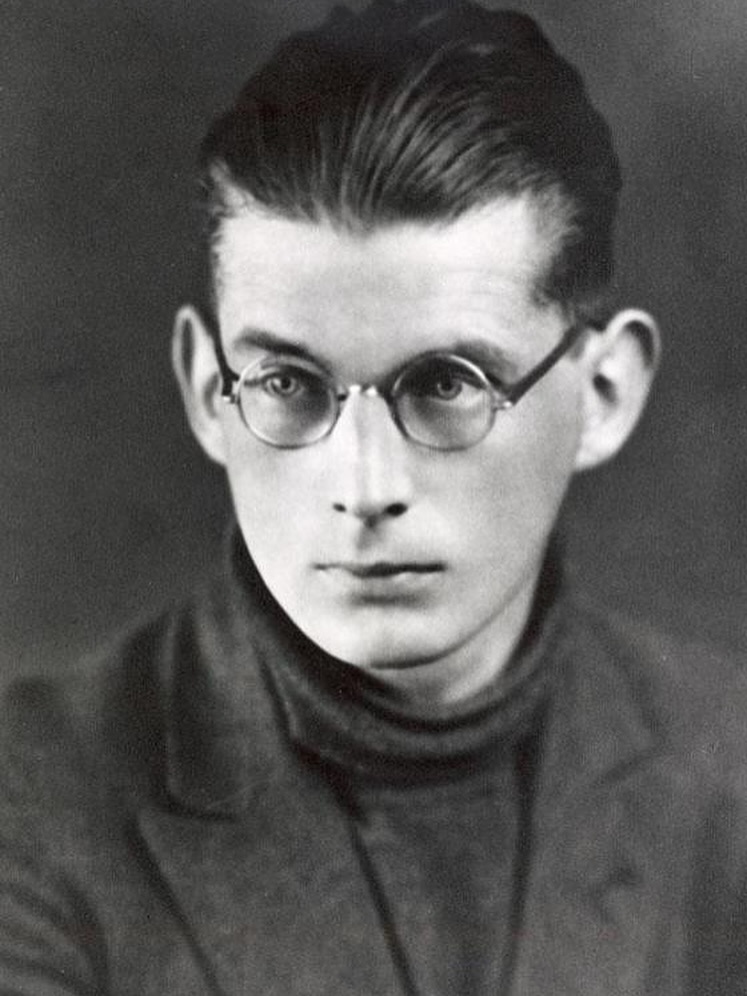
Samuel Beckett’s “Proust” (1930) was a commissioned piece 📠, “an act of understanding in which…
Translated from French.
Samuel Beckett’s “Proust” (1930) is a commissioned work 📠, “an act of understanding in which both the work being understood and the person understanding it are revealed” (preface by E. Fournier). I would even go so far as to say that it reveals more about the critic than the work itself 📖. For Beckett at that time was a “fiery young student, struggling to rein in the excesses of his erudition.” Through an excess of intelligence, he often strays from the meaning. His text reveals, rather, the early seeds of his own work – and the influence of James Joyce – than that of Proust. 🤵🏻♂️
Ramon Fernandez’s “Proust” (1943) is much clearer than Beckett’s. He was 48 when he wrote his “Proust”; Beckett was only 24. Yet “the Search” is not a novel written in one’s twenties, but in middle age 🕰️. In its finest passages, the young Beckett states the obvious 👨🏻🚒, paraphrasing episodes that the narrator has already made as clear as can be. For Beckett, the themes of the work are wisdom, suffering, habit and boredom 🥱… whereas Fernández speaks to us of love ❤️🩹, death and art. These are less secondary.
Beckett also asserts that the final volume should have been titled “Time Abolished”. However, whilst Proust evokes the abolition of human time and eternity in art, time is not for that reason “abolished”. It would be if the narrator were to linger in the Guermantes’ library 📚. There, he does indeed experience the interweaving of space and time. But he then returns to the reception and its guests, and time reasserts itself: the decrepitude of the faces 👴🏻👵🏻 he has not seen for years, the persistent remarks from several guests about his age, and his confusion between Gilberte and her mother, Odette.
🖋️ “From victory over time, he moves on to the victory of time; from the denial of death to its affirmation,” writes Beckett.
Time is therefore not abolished, for it always takes precedence over human lives 🛌🪦. It is, in fact, this realisation that will prompt the narrator to return home, to withdraw into seclusion and to devote himself entirely to his work: time has not been abolished; on the contrary, time is running out. ⏱️
Comments 11
Comments translated automatically.
On Instagram