Many theories have been put forward to ‘identify’ the origin, in the Search, of the famous ‘little phrase’…
Translated from French.
Many theories have been put forward to ‘identify’ the origin, in “the Search for Lost Time”, of the famous melodic ‘little phrase’ composed by Vinteuil, which in “Swann in Love” becomes the national anthem 🎻 of the love between Charles and Odette, and which later reappears in the story between the narrator and Albertine. 💔 Here is an episode that already foreshadowed it in “Jean Santeuil”:
🖋️ “Jean watched with anxious and despondent attention as their love drew to a close, and as the evil he had hoped their love would cure continued to take hold (…)
He remained seated some distance away from her, not daring to approach, unsure whether he would awaken the love or the hatred that seemed to lie dormant. Suddenly she stood up. He thought she was coming towards him. But she stopped in front of the piano, sat down and began to play. At the very first notes, an extraordinary sense of anguish seized him; he grimaced to stop himself from crying. (…) He had recognised that passage from the Saint-Saëns sonata which, almost every evening in those happier days, he would ask her to play and which she would play for him endlessly, ten times, twenty times in a row, insisting that he stay close to her so that she could kiss him without stopping, bursting out laughing when, pretending to stop, he would say to her: “More, more”—that laughter which would fall tenderly upon him from her eyes and lips, as gentle as a warm shower of kisses. Far from her, all alone, having received no kiss that evening and not daring to ask for one, he listened to that phrase, whose divine smile had already seemed to him, even in the days of their happiness, to have lost its magic.”
— Marcel Proust, “Jean Santeuil”, section ‘On Love’, @quarto_livres, pp. 796–797
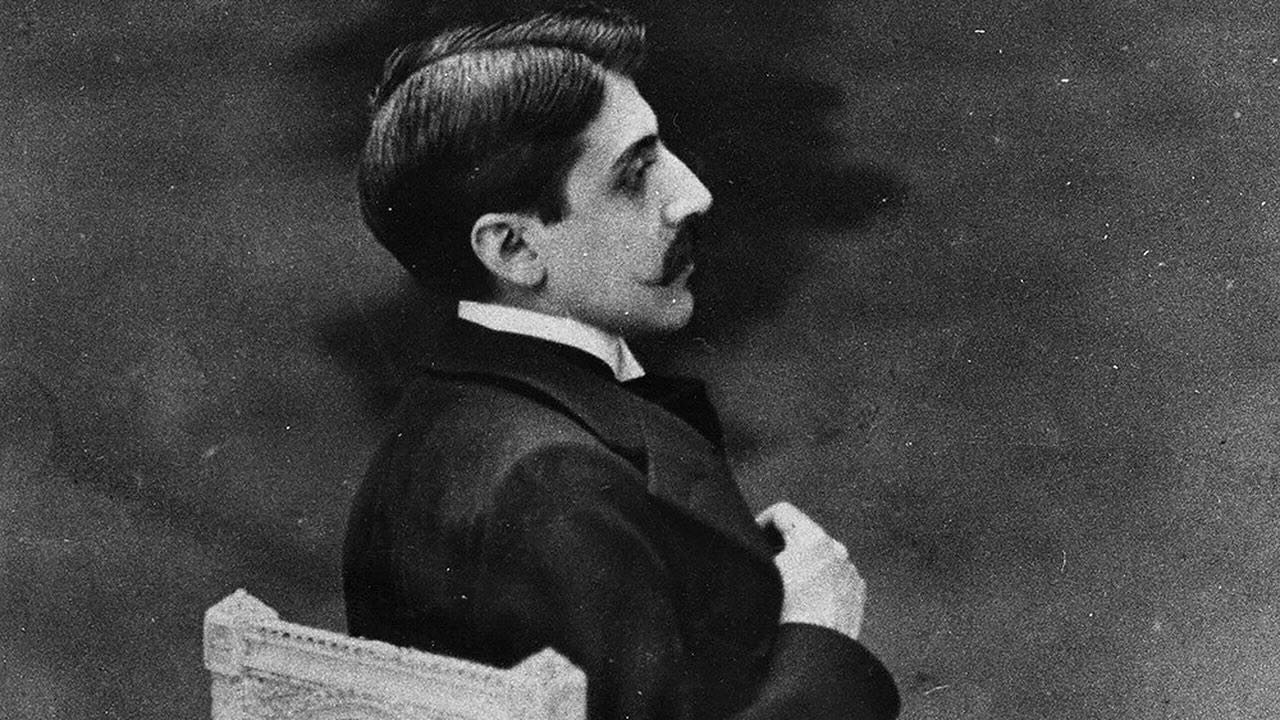
When Proust began writing this draft of a novel, he was in love with the young composer Reynaldo Hahn. 🎹 It is no doubt partly he who appears here in the character of Françoise, a young widow with whom Jean is in love and of whom he is jealous. Ironically, it was a very jealous Proust who ended his relationship with Reynaldo Hahn… only to fall in love with Lucien Daudet. 🫣
📚 On Proust’s jealousy: letters and biographies.
📓 See also: “The End of Jealousy” @editionsfolio
#MarcelProust #JeanSanteuil #proustagram
@associationreynaldohahn @editionsplon @editions.sillage
Comments 10
Comments translated automatically.
On Instagram