Intelligence
Translated from French.
Intelligence 🤓✨
“Every day, I place less value on intelligence.” — Marcel Proust, “Against Sainte-Beuve” 🤷🏻♂️
For Proust, a work of the intellect is inevitably limited, because it appeals only to the intellect. In “Finding Time Again”, the narrator realises that the intellect plays an important but limited role: that of shedding light on our feelings and impressions. “Where life builds walls, the intellect finds a way out.” 🏚️ @editionsfolio p. 212
But it is indeed sensations, and the recurrence of the same sensations over time (especially taste, smell and hearing, as sight is considered a deceptive sense, one that is too attached to appearances), that take precedence over the intellect in enabling us to ‘read within ourselves’. 🧖🏻♂️
It would therefore be wrong to believe that “In Search of Lost Time” is a work of pure intellect, a monument to intellectualism. Quite the opposite: the entire edifice rests on two uneven foundations, that of raw sensation and that of the imagination. Intellect is employed solely to recapture lived experience and to ‘find a way out’, that is to say, to succeed in transposing fleeting impressions into the expression of a shared experience, into one of those “general laws” that Proust sought whilst composing his novel. 🔍
“Soon I was able to show a few sketches. Nobody understood them at all. (…) Whilst I was searching for the great laws, I was called a nit-picker.” 🤦🏻♂️ @editionsfolio p. 346
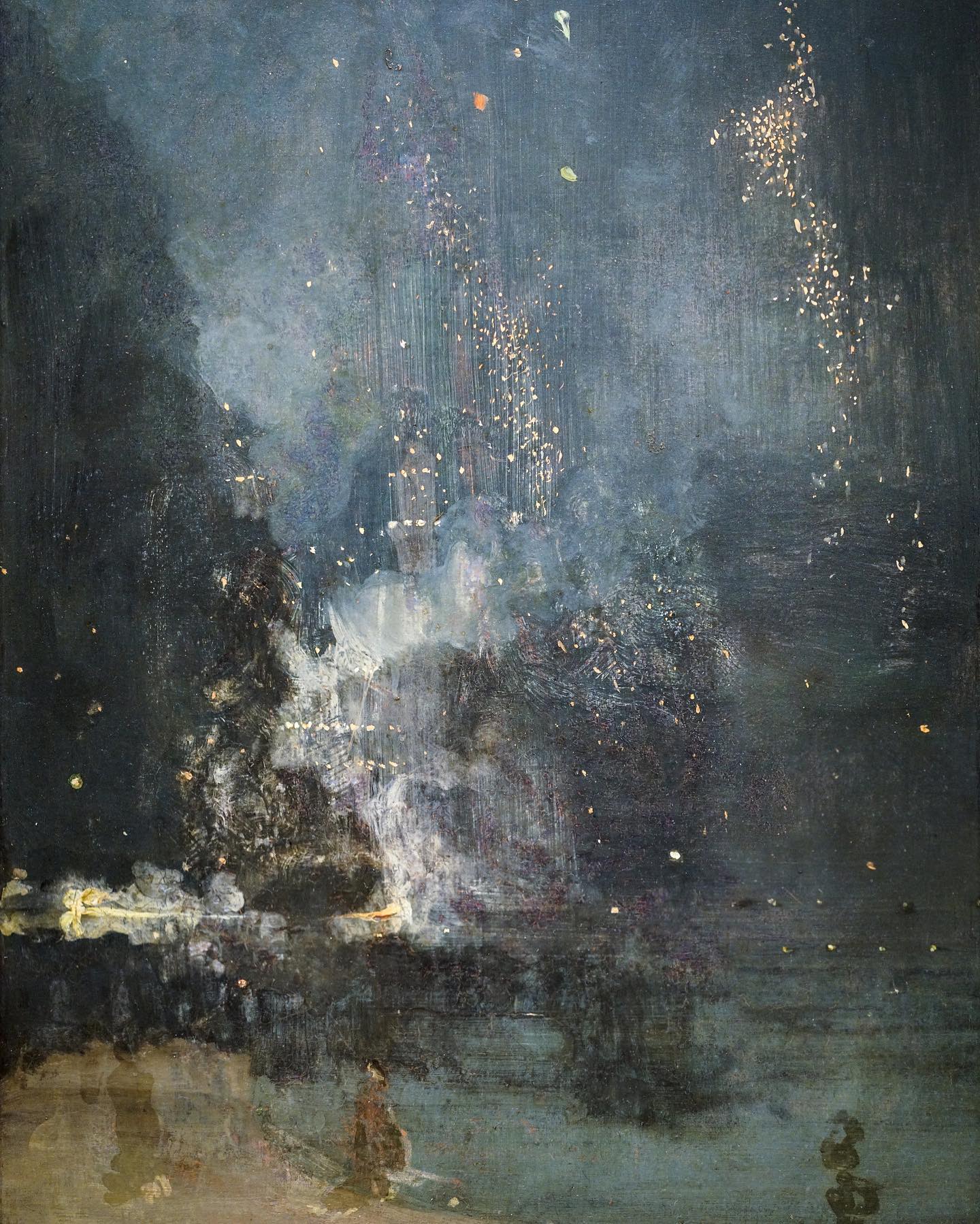
James Abbott Whistler (model and anagram of the painter Elstir), “Nocturne in Black and Gold”, 1874 ✨
#marcelproust #RTP #centenairemarcelproust #proustagram #proustestvivant #proustisstillalive #proustalive @amisdeproust @labnf @editions_gallimard
Comments 2
Comments translated automatically.
On Instagram