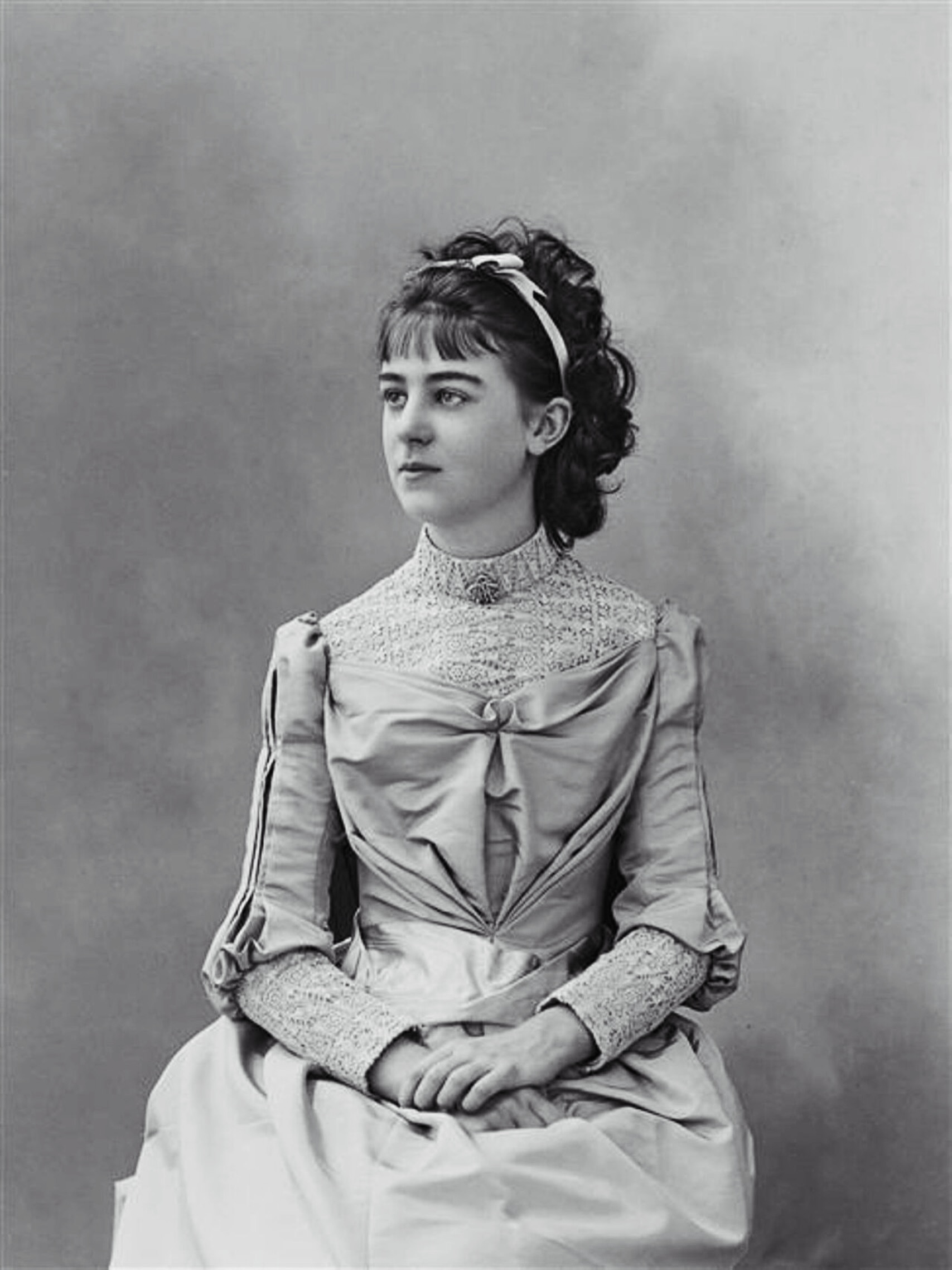
Here is how É. de Clermont-Tonnerre ✍🏻 (1875–1954), who later reverted to her maiden name, Élisabeth…
Translated from French.
Here is how É. de Clermont-Tonnerre ✍🏻 (1875–1954), who later resumed using her maiden name, Élisabeth de Gramont, describes her meeting with Proust at Madeleine Lemaire’s house in 1903:
🖋️ “Surprised, I asked who this peculiar young man was, leaning so exaggeratedly over the back of the gilded chair in which Mrs Straus was seated. ‘That’s the young Proust,’ I was told. He was striking for the sheer abundance of his black hair, which was always unruly, except during the year he spent as a volunteer, when he was clean-shaven, as one of his photographs shows. ‘His pale, thin face, with a long, aquiline nose, gave him an oriental air, which became distinctly Assyrian when he let his full beard grow.’ Vast black pupils, which betrayed no personal emotion but looked like two receptacles ready to receive all the visible waves of space, let their orbs shine upon those he spoke to; and from his mouth, often twisted into a wry smile, came a distinctive voice, somewhat childlike, caressing, gentle, laden with a thousand graceful inflections, giving the impression of those soft little hands, smeared with jam, that very young children run over your face and clothes; it’s tender and sticky; you feel both flattered and a little annoyed.”
It is the first page of his “Robert de Montesquiou and Marcel Proust”, published in 1925, which was one of the first accounts or documents to be published following Proust’s death in 1922. 🪦🍂
Antoine Compagnon has since shown that the ‘Assyrian profile’ was a common anti-Semitic phrase at the time, but one that no one dared to call by its name. 🤵🏻♂️
Excerpt quoted by Matthieu Vernet
📔 Marcel Proust’s Circle, IV
@honorechampion @amisdeproust, 2025, p. 221
Comments 8
Comments translated automatically.
On Instagram