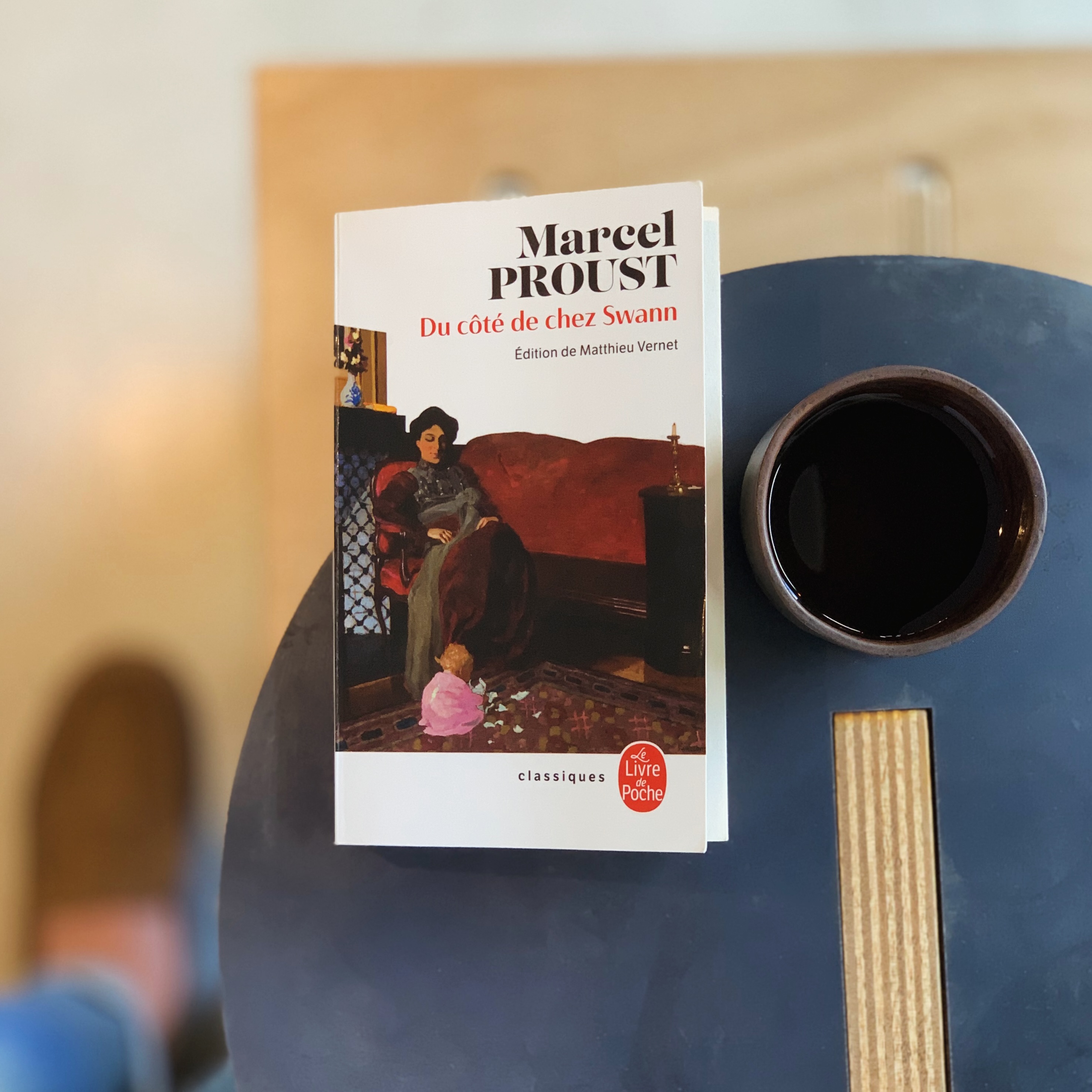
A few words about Swann, Legrandin, Bloch and the narrator
Translated from French.
A few words about Swann, Legrandin, Bloch and the narrator:
Legrandin is a snob 🤵🏼♂️ who claims to be anti-snob. He claims that snobbery is the “only unforgivable sin”, but as they leave the church in Combray, the narrator and his parents catch him in the very act of renouncing his principles and discover “the possibility of a completely different Legrandin”. 🙃
Swann is an aesthete 🖼️, but whilst he is held in high regard by the Guermantes and the whole of Parisian ‘high society’, he is not driven by the idea of a social hierarchy. In fact, he marries a courtesan.
Swann is the narrator’s forerunner, his John the Baptist, so to speak ☝🏻. Whilst they may give the impression of frequenting society gatherings for a while, this is a misunderstanding: they very quickly come to their senses regarding the world’s illusions and are actually there out of love for someone 💔❤️🩹, not to try to climb the social ladder.
Swann’s antithesis is Legrandin. The narrator’s antithesis is his friend Bloch. 👦🏻👦🏻
Swann, in reality, is a modest man. Someone who keeps a low profile, and whom the narrator will criticise precisely for this very trait. He will never write his study on Vermeer ✍🏻 nor will he ever hear Vinteuil’s complete works 🎻: Proust uses Swann to criticise the attitude of aesthetes and sterile scholars.
He possesses a true nobility of soul and heart 🫶🏻, and a keen intellect, which makes him an alter ego of Charlus or Oriane. But he makes no display of his status; indeed, in Combray, the narrator’s entire family is convinced that he is merely their neighbour 🏡, and certainly not a close friend of the Prince of Wales.
Comments 4
Comments translated automatically.
On the site
On Instagram