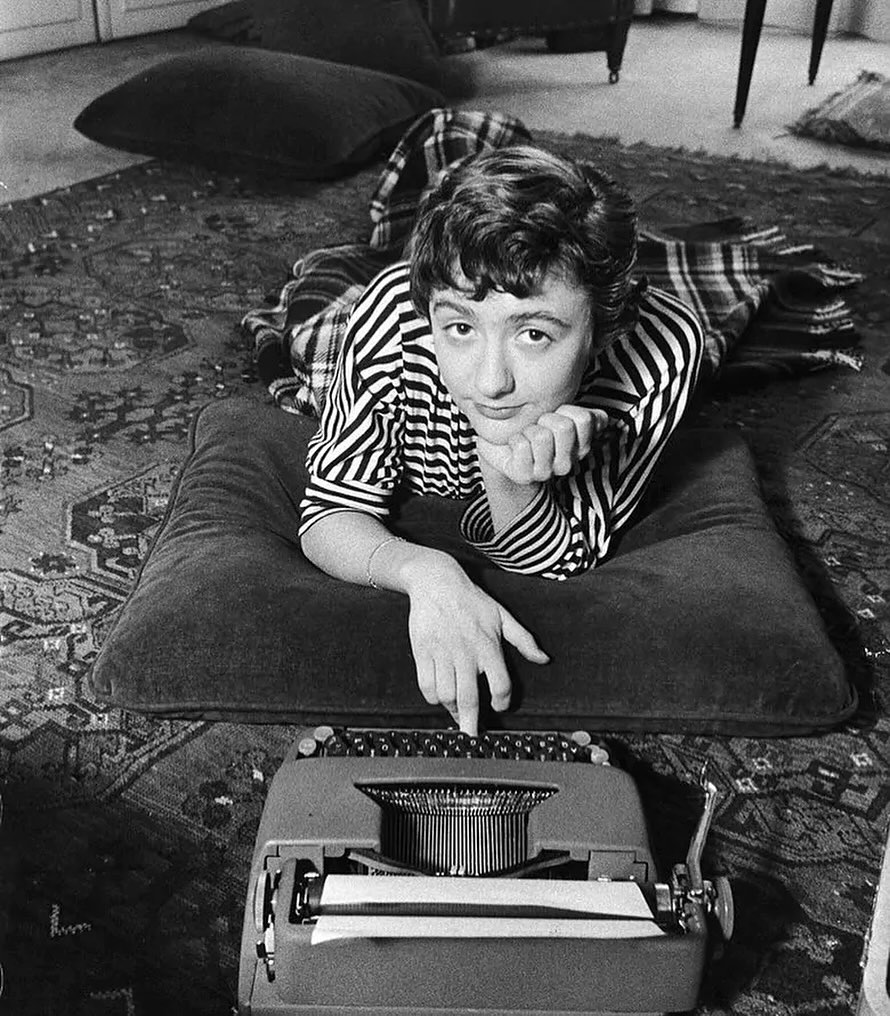
After talking about his reading of Gide’s “Les Nourritures terrestres”, Camus’s “The Rebel” and the…
Translated from French.
Having mentioned her reading of Gide’s “Les Nourritures terrestres”, Camus’s “The Rebel” and Rimbaud’s “Illuminations” 📚, Françoise Sagan, who admitted to having borrowed her pen name from “the Search”, pays Marcel Proust the tribute she owes him:
🖋️ “Since then, I’ve met lots of people who hadn’t been able to read Proust because they ‘couldn’t get to grips with it’, because “Swann in Love”, the famous “Swann’s Way” that was thrust into their hands, baffled and bored them 🥱. And I think that, for my part, if I’d started with Odette’s love affairs and the narrator’s childhood, I’d have found it much harder to get to grips with those endless pages 😵💫. With The Fugitive, I was plunged straight into the drama; I began with the sole plot twist in the entire Proustian oeuvre, the sole event, the sole accident, the sole instance in which Proust gives voice to chance and in which chance takes the form of a telegram: “My poor friend, our little Albertine is no more; forgive me for telling you this dreadful news, you who loved her so dearly. She was thrown from her horse against a tree whilst out riding...” 💔 I began with that sentence and then plunged headlong into a grief and despair stretched to the point of madness and inexorably rehashed, commented upon and dissected by the Narrator. It was through this very path that I introduced many friends—who had been put off by “Swann” and who, like me, were gripped by the loss of The Fugitive—to the love of Proust.” ❤️🩹
🗳️ And you – which part of a sentence drew you into Proust’s work?
Françoise Sagan,
With my warmest regards,
@editions_gallimard 1984,
@editionsfolio 1985, pp. 148–149
👇🏻 The rest of the quote is in the comments 👇🏻
#FrançoiseSagan #MarcelProust #Albertinedisparue #proustagram #DuCôtédechezSwann #UnamourdeSwann #OdettedeCrécy #CharlesSwann #Sagan #Proust
That writing requires a specific, precious and rare talent — a truth that has become impertinent and almost incongruous in this day and age; moreover, thanks to the gentle contempt it feels for its false priests or usurpers, literature takes its revenge all by itself: it turns those who dare to touch it, even with the tips of their fingers, into powerless, bitter cripples — and grants them nothing — save, perhaps, out of cruelty, a fleeting success that ravages them for life.”