Home › Posts

I often say that “the Search” is the story of a hold 🔗⛓️ but, above all, of a ‘letting go’…

Translated from French.

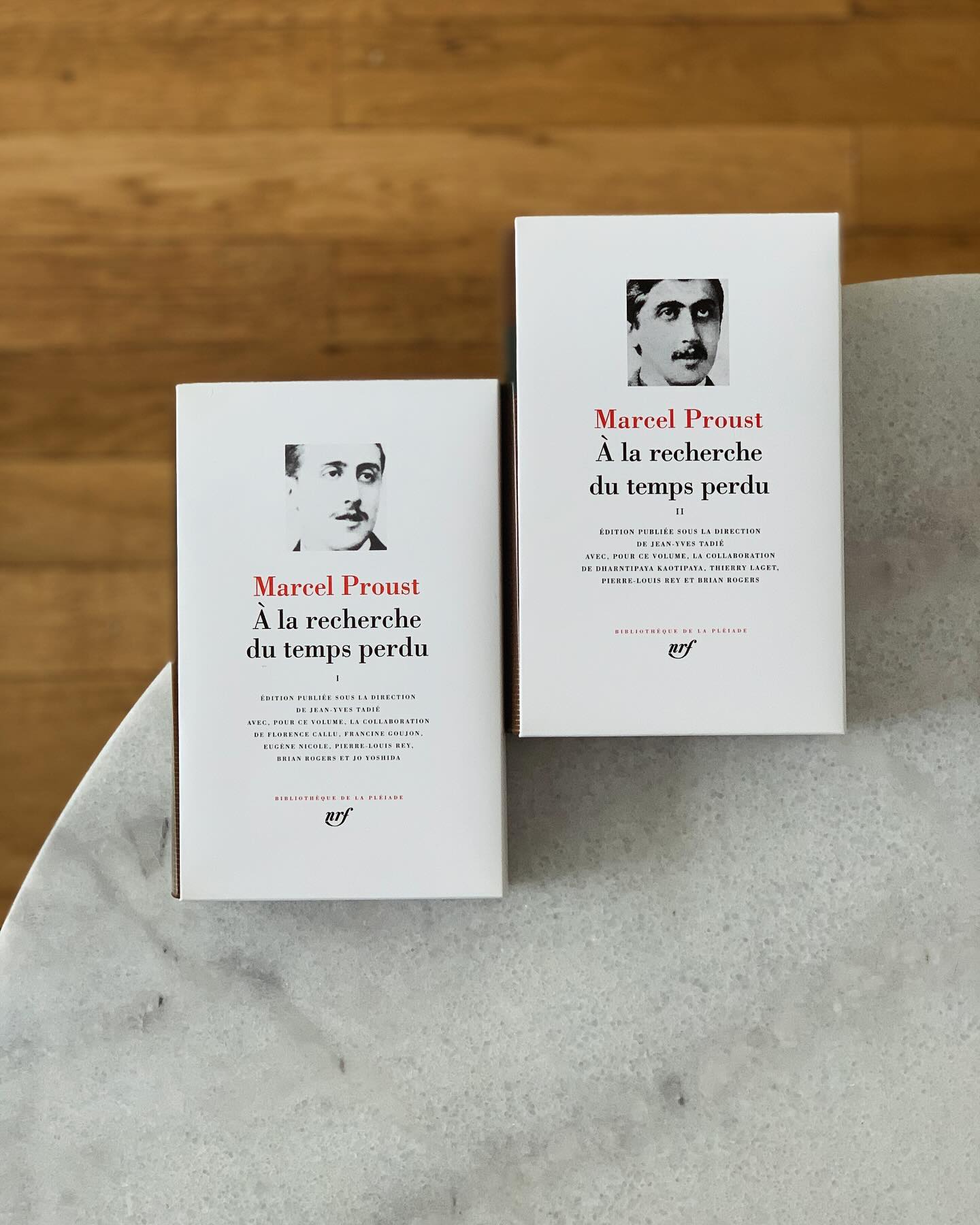
I often say that “the Search” is the story of a hold 🔗⛓️ but, above all, of a ‘letting go’ ⛓️‍💥. In it, the narrator recounts his long (and long-uncertain) realisation regarding the vanity of the world, the recurring patterns of love, and the dead ends of writing and art.

In “In the Shadow of Young Girls in Flower” 🌸, for example, he articulates this paradox: ‘(…) the news that one is to see the one one loves again would cause a rather unpleasant stir.’ The narrator feels the effects of this absence, but it is a chosen absence. A ‘detox’ 🧪🦠, if I may say so.

🖋️ “We all know that, when we no longer love, forgetting – even a vague memory – does not cause as much suffering as an unhappy love. It was the soothing gentleness of such anticipated forgetting that I preferred, without admitting it to myself.”

The narrator chooses the lesser of two evils. He is aware of the strength of his romantic attachment, and prefers a chosen separation 📬 to a forced parting. Since his jealousy makes his love impossible, and since he cannot bind 🪢 the one he loves to him, he must detach himself from her first.

🖋️ “Through the harm she has done to us, woman is closing in on us ever more, tightening our chains, but also those which, until now, we would have thought it sufficient merely to bind her with so that we might feel at ease.”

In his relationship with Gilberte, which is drawing to a close, just as in his budding relationship with Albertine, the narrator eventually realises that his desire to possess is futile, for one never possesses what one loves. What one loves possesses us. ❤️‍🩹

#MarcelProust #Àlombredesjeunesfillesenfleurs #RTP #Àlarecherchedutempsperdu #proustagram #Albertine #Balbec #PrixGoncourt #1919

Comments 7

Comments translated automatically.

On Instagram

  • B
    @berthier_pierre23 September 2024 · 2
    De-poisoning… what a brilliant idea!
  • B
    @biblioparfum23 September 2024 · 6
    A fine analysis… the same is true of the reader: they believe (I believed) they were devouring “In Search of Lost Time”… but it is “In Search of Lost Time” that devours them!
  • I
    @inbalbec23 September 2024 · 1
    Always favourite!
  • A
    @amapolita_47__23 September 2024 · 1
    What a brilliant comment!!! Thank you 🔥🔥🔥🔥
  • R
    @rudaamerico23 September 2024 · 1
    My greatest classic!
  • D
    @danslebaindhector23 September 2024
    It is the reader who creates the novel by talking about it — let’s say, it is an interpretation… Is “In Search of Lost Time” merely a more or less happy love story? One of self-discovery, certainly, but it is also that of the reader in their ability to reveal and be revealed through it. I remember its conclusion, about irremediable loneliness — that of the narrator? Of ourselves? I don’t know, but it seemed to me that Proust was mistaken on this point. In any case, I questioned this conclusion, or the one I’d drawn from the novel — how could I tell whether it was me or the novel that was mistaken? What did Céleste, who never left his side for years, make of this idea of loneliness put forward by ‘Monsieur Marcel’? As she was paid to look after the writer, did her presence not count for anything? In that case, could it be that money, paradoxically, is what makes one lonely, even though one pays to avoid being so? [PLEASURE, PASTICHE AND INSTAGRAM 😙]
  • N
    @nawimal923 September 2024 · 1
    ❤️

Leave a comment

Comments are reviewed before they appear. Your email is never published — see the privacy policy.

The Proustagram newsletter

New posts, articles and essays in your inbox — now and then, never too often.

Unsubscribe in one click from any issue. Privacy.